

Working Films News

COAL ASH STORIES RETURNS TO THE TARHEEL STATE

May 13, 2016 BY Molly Murphy

CASNCBLOG

Just before the second anniversary of the Dan River coal ash spill, the NC Department of Environmental Quality (DEQ) held public hearings on basin closures across the state. At the center of the public comment period, and a series of hearings across the state, was determining the priority for closure among the 14 Duke Energy owned coal ash sites. The final rankings will determine both the closure clean-up process and a closure deadline.

To inform residents and involve them in the DEQ public comment period, Working Films organized six Coal Ash Stories events in towns and cities where the hearings will be held: Shelby, Goldsboro, Salisbury, Charlotte, Winston Salem, and Walnut Cove. We teamed up with Appalachian Voices, Clean Water for North Carolina and NC Warn to plan the tour. We also partnered with community based partners in each location, including Broad Riverkeeper, French Broad Riverkeeper, Down East Coal Ash Coalition, Yadkin Riverkeeper, Central Piedmont Sierra Club, Catawba Riverkeeper, Temple Emanuel Environmental Movement, and Residents for Coal Ash Cleanup.
CASBLOG2
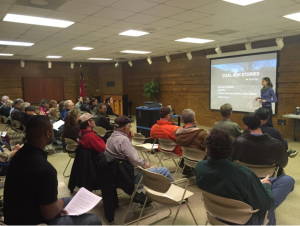
Katie Hicks, with Clean Water For North Carolina introduces the films in Shelby. Photo credit: Casey White.

The events provided a catalyst for audiences to write comments and receive information about the upcoming hearings. The screenings were also an opportunity to talk with neighbors, issue experts, and advocates about how to get involved in ongoing efforts to protect their communities. The tour happened at a critical time for citizens to speak out for a transparent, swift, and protective plan to safely store coal ash and ensure safe drinking water for neighbors of coal ash sites. This was the first and only opportunity for direct public input on the fate of Duke’s NC coal ash basins.
NCCaslblog3
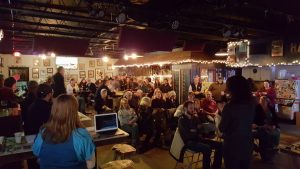
Packed house for the Charlotte screening! Photo credit: Britten Cleveland.

Britten Cleveland, organizer with Central Piedmont Sierra Club, one of the local hosts of the Charlotte screenings, said, “The event was great! It was such an amazing show of teamwork. We had dozens of people take action, or commit to taking action (attend hearings and phone bank).”

For more info on the tour, check out this great coverage from the Shelby screening, which features quotes from concerned community members.


RELATED NEWS

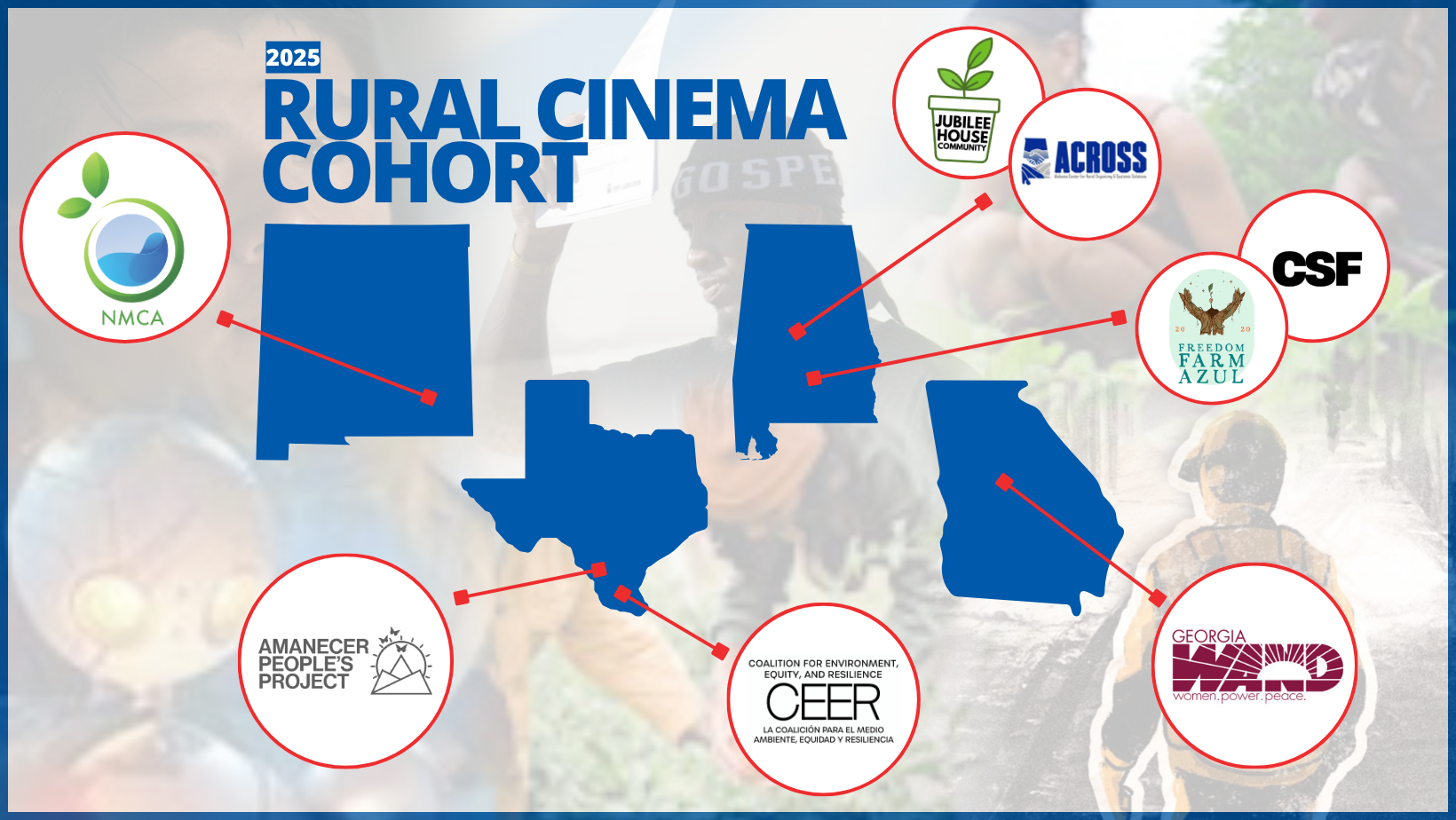
Get to Know the 2025 Rural Cinema Cohort

At its heart, Rural Cinema is about harnessing the power of story to drive change. The program trains environmental justice organizers to use film as a tool to bring people together, spark meaningful conversations, and inspire action on the challenges their communities face. With hands-on training, access to films, and funding to host their own series, participants transform storytelling into tangible, local impact. This year, we’re excited to shine a spotlight on the 2025 Rural Cinema cohort, a remarkable group of organizations from across the country that are reshaping what’s…

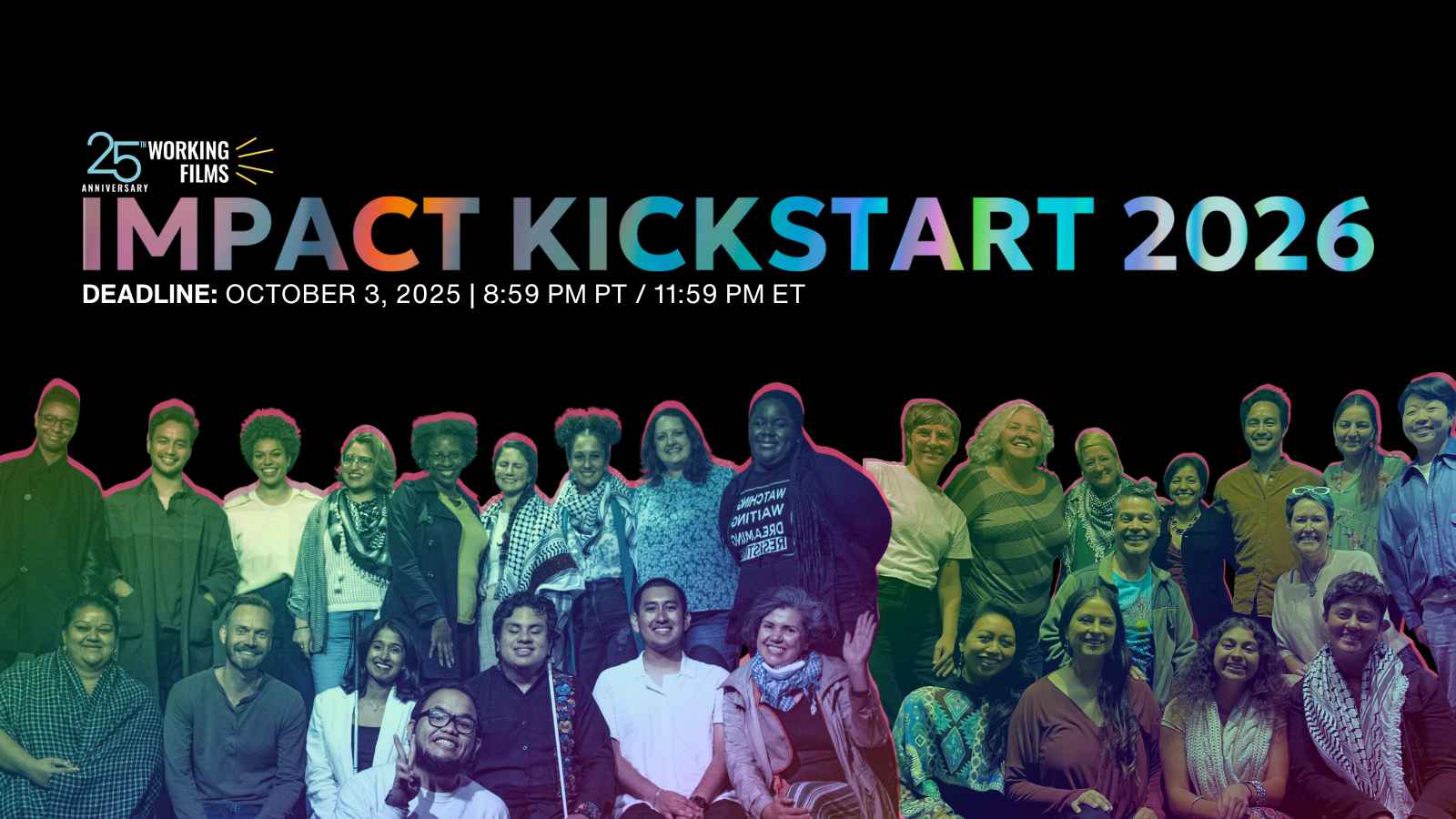
Impact Kickstart 2026: Call For Applications

[vc_row][vc_column][vc_column_text css=""]For a documentary film to make a difference, a solid strategy for audience engagement and strong partnerships are key. Filmmakers often lack time to do this work themselves or the expertise and resources to make an impact campaign happen. Emerging filmmakers and underrepresented filmmakers can face the biggest hurdles, despite the immense potential of their projects. Working Films’ response to this challenge is the Impact Kickstart, a program offering partnership and strategy development support to underrepresented filmmakers with feature-length films that hold great promise to catalyze action to address…

Story Leads to Community: Ava Auen-Ryan, Iowa Citizens for Community Improvement

How do film screenings build community in rural and small towns? Andy Myers, Director of Campaigns and Strategy, chats with Ava Auen-Ryan, community organizer with Iowa Citizens for Community Improvement (Iowa CCI). They discuss how relationship building is at the center of rural organizing. Leading with intentionality, organizers can use the power of story and community film screenings to bring people into their membership base and build power to create social change. Andy: I always think of film as a great tool specifically for organizers that work with the people.…