

What do indigenous communities in the Amazon and a rather prosperous coastal town in North Carolina have in common? Not much you might think, and generally you would be right. There are certainly many differences, but it turns out that folks concerned about the environment and public health in Wilmington, North Carolina have much to learn from communities struggling for environmental justice in the Ecuadorian villages featured in the film Crude. A screening of Crude at the Cucalorus Film Festival in Working Films’ hometown of Wilmington, N.C. gave me the opportunity to make the connection between a powerful international David and Goliath story and local struggles to protect our health and environment.

Crude is a real-life, high stakes legal drama that uncovers the infamous “Amazon Chernobyl” case in which indigenous communities are suing Texaco/ Chevron for the environmental, cultural, and medical devastation that the companies’ oil exploration have wreaked on their communities and land. We don’t have any oil exploration happening on the coast of North Carolina, but we do have a multi-national corporation called Titan America that has gotten 4.2 million dollars in tax incentives from our county commissioners to build the fourth largest cement plant in the country, right on the banks of the beautiful Cape Fear River.
For those of you that don’t know much about cement plants, they are coal fired kilns that spew particulate matter including mercury and other toxic chemicals into the air and water. In order to make the cement, companies have to quarry limestone, a process that has the potential to drastically deplete and pollute our local aquifer.
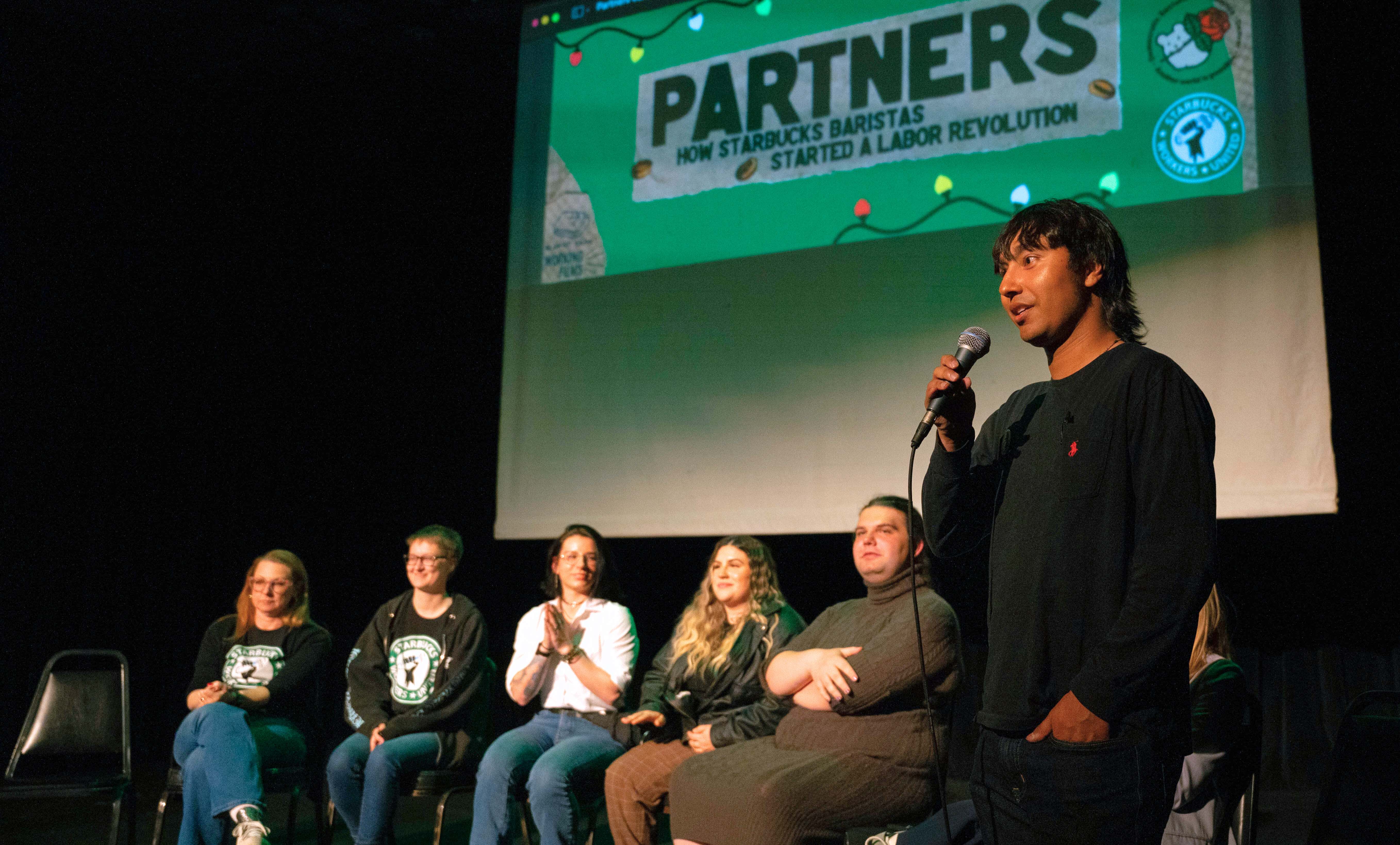
As part of our Q&A panel, we included Joel Bourne one of the lead organizers for Stop Titan, a group that is organizing concerned citizens to fight the construction of the plant. Joel talked about lessons from the film that he thought we could learn locally and apply to the fight against Titan, with persistence being the primary take away. He filled the audience in on the latest in efforts to block the plant and called on folks to get involved by writing letters to the editor and writing or calling the state departments that are considering issuing air and water permits for the plant.
In addition to Joel, our panel consisted of Jennifer Horan, a professor at UNC Wilmington who is an expert on the effects of oil exploitation on these Amazonian indigenous communities. She was able to fill in gaps and answer audience questions about what they saw on the screen. We also had student organizer, Andy Myers, of UNCW’s Environmental Concerns Organization (ECO) on the panel. He had petitions for folks to sign in support of a strong international agreement on climate change in Copenhagen.
All in all, we used the Cucalorus screening of Crude to make connections to local issues and provide outlets for the audience to take meaningful action. If the conversations that continued long after the credits rolled are any indication, film festival goers left fired up and ready to get more involved in stopping Titan and fighting climate change.