
The Documentary Accountability Working Group considers values, guiding principles and ethics that inform the practices of filmmakers, and shape their relationship to the story, the participants, the audience, funders and other stakeholders. The working group grew organically out of a…
LATEST NEWS
Working Films News

Announcing Impact Kickstart 2023
For a documentary film to make a difference, a solid strategy for audience engagement and strong partnerships are key. Filmmakers often lack time to do this work themselves or the expertise and the funds to pay for it. Emerging filmmakers,…
For a documentary film to make a difference, a solid strategy for audience engagement and strong partnerships are key. Filmmakers often lack time to do this work themselves or the expertise and the funds to pay for it. Emerging filmmakers, creators of color, and underrepresented artists can face the biggest hurdles, despite the potential of their projects. Working Films’ response to this challenge is the Impact Kickstart, a program offering in-kind partnership and strategy development to underrepresented documentary directors with feature films in progress that hold great promise to catalyze action to address important and current social issues.
“As the documentary and social justice landscape continues to shift and evolve, Working Films remains committed to prioritizing and uplifting underrepresented filmmakers who often face the biggest hurdles despite the potential of their projects,” says Gerry Leonard, Director of Filmmaker Services. “We believe the Impact Kickstart program and grant reflects that commitment to redistribute resources and access within the documentary film ecosystem. This program taps into a film’s inherent strengths, rooted in the goal of creating collective social change and impact.”
Now in its sixth year, the Impact Kickstart program has helped underrepresented filmmakers create strategic goals for impact and specific plans to engage future partners, funders, and audiences in meaningful ways. Impact Kickstart was created to fill a gap in support for the impact campaigns of underrepresented filmmakers, including directors who identify as Black, Indigenous, and/or people of color (BIPOC), undocumented, LGBQ+, nonbinary, transgender, disabled, and female directors with a majority female and/or underrepresented film team.

Working Films News
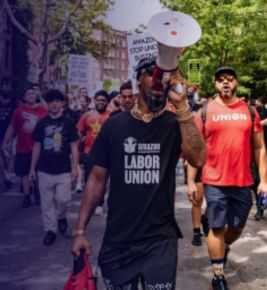
Working Films and National Labor Leaders Announce Short Film Fund to Support Worker-Led Organizing
Working Films, in collaboration with Amazon Labor Union, North Carolina AFL-CIO, Starbucks Workers United, Union of Southern Service Workers, and United Farm Workers, are issuing a call for short films that will amplify workers seeking to have their voices heard.…
 Working Films, in collaboration with Amazon Labor Union, North Carolina AFL-CIO, Starbucks Workers United, Union of Southern Service Workers, and United Farm Workers, are issuing a call for short films that will amplify workers seeking to have their voices heard. Since 2018, through a program called Docs in Action, Working Films has funded, curated, and distributed short films that illuminate and offer solutions to critical issues facing the nation. In 2023, the fund will focus on the growing wave of worker-led organizing throughout the United States.
“With this momentous rise of workers coming together to say ‘enough is enough,’ especially in industries that are set up to keep workers from unionizing, there could not be a better time for films about workers' rights. To expand on this moment, we need stories that share the value and significance of unions as well as films that share success stories and a ‘how-to’ of workers fighting back and winning” said Andy Myers, Director of Campaigns and Strategy at Working Films. “We hope the films we fund and curate will demonstrate the possibilities of the moment we are in and further build this surge in labor organizing.”
Unions offer hope and support for workers in our economy, serving as a means to address workplace concerns and promote equality. They also intersect with various justice-related struggles of our time. The 2023 Docs In Action Film Fund plans to showcase these aspects, emphasize the collective power of worker-led movements, and demonstrate that unity among workers can overcome obstacles. The films produced through this initiative will build understanding and empathy, and will inspire workers to organize within their own workplaces while fostering solidarity with the broader labor movement.
Working Films, in collaboration with Amazon Labor Union, North Carolina AFL-CIO, Starbucks Workers United, Union of Southern Service Workers, and United Farm Workers, are issuing a call for short films that will amplify workers seeking to have their voices heard. Since 2018, through a program called Docs in Action, Working Films has funded, curated, and distributed short films that illuminate and offer solutions to critical issues facing the nation. In 2023, the fund will focus on the growing wave of worker-led organizing throughout the United States.
“With this momentous rise of workers coming together to say ‘enough is enough,’ especially in industries that are set up to keep workers from unionizing, there could not be a better time for films about workers' rights. To expand on this moment, we need stories that share the value and significance of unions as well as films that share success stories and a ‘how-to’ of workers fighting back and winning” said Andy Myers, Director of Campaigns and Strategy at Working Films. “We hope the films we fund and curate will demonstrate the possibilities of the moment we are in and further build this surge in labor organizing.”
Unions offer hope and support for workers in our economy, serving as a means to address workplace concerns and promote equality. They also intersect with various justice-related struggles of our time. The 2023 Docs In Action Film Fund plans to showcase these aspects, emphasize the collective power of worker-led movements, and demonstrate that unity among workers can overcome obstacles. The films produced through this initiative will build understanding and empathy, and will inspire workers to organize within their own workplaces while fostering solidarity with the broader labor movement.
 "In the last few years, there have been a lot of uprisings, strikes, and unions. There are people who are interested, who weren't before, but a lot of people don’t know our rights as workers. If I knew what I know now - my own organizing would have really benefited. The films we choose will share these rights and give workers the tools they need to to organize their own workplaces. These stories will show that it’s possible to be done anywhere” said Chris Smalls, President of Amazon Labor Union.
According to Eric Winston, a representative of the Ignite Committee of the Union for Southern Service Workers (USSW), “we really want stories that expand on the idea of what a union is. People are told being in a union means a boss tells you you are in a union, but a union just means coworkers coming together and saying they will be one voice to make conditions better. We also need stories that share the struggles low wage workers go through including their mental and physical health.”
The 2023 Docs in Action program includes two tracks. First, filmmakers can apply for up to $30,000 in funding for short documentary films. Filmmakers with works-in-progress can apply for funding to complete short documentaries under 30 minutes. The funding will exclusively cover the completion costs of the projects. Second, filmmakers can submit completed documentaries or narrative films to be included in a compilation that will tour the U.S. in 2024. Films selected for the compilation will receive screening rights fees. Working Films will also offer free consultation, peer-to-peer networking, and other in-kind support opportunities. Priority will be given to films featuring personal stories and those created by individuals directly affected by the issues.
Filmmakers may apply for both tracks of the Docs in Action program, but only one project per applicant is permissible for funding consideration. The director or producer of the film must be the applicant. All selected projects must be fully completed no later than May 1st, 2024. The deadline for applying for both tracks is 11:59 ET on August 13th, 2023.
More information can be found at www.workingfilms.org/docsinaction2023.
"In the last few years, there have been a lot of uprisings, strikes, and unions. There are people who are interested, who weren't before, but a lot of people don’t know our rights as workers. If I knew what I know now - my own organizing would have really benefited. The films we choose will share these rights and give workers the tools they need to to organize their own workplaces. These stories will show that it’s possible to be done anywhere” said Chris Smalls, President of Amazon Labor Union.
According to Eric Winston, a representative of the Ignite Committee of the Union for Southern Service Workers (USSW), “we really want stories that expand on the idea of what a union is. People are told being in a union means a boss tells you you are in a union, but a union just means coworkers coming together and saying they will be one voice to make conditions better. We also need stories that share the struggles low wage workers go through including their mental and physical health.”
The 2023 Docs in Action program includes two tracks. First, filmmakers can apply for up to $30,000 in funding for short documentary films. Filmmakers with works-in-progress can apply for funding to complete short documentaries under 30 minutes. The funding will exclusively cover the completion costs of the projects. Second, filmmakers can submit completed documentaries or narrative films to be included in a compilation that will tour the U.S. in 2024. Films selected for the compilation will receive screening rights fees. Working Films will also offer free consultation, peer-to-peer networking, and other in-kind support opportunities. Priority will be given to films featuring personal stories and those created by individuals directly affected by the issues.
Filmmakers may apply for both tracks of the Docs in Action program, but only one project per applicant is permissible for funding consideration. The director or producer of the film must be the applicant. All selected projects must be fully completed no later than May 1st, 2024. The deadline for applying for both tracks is 11:59 ET on August 13th, 2023.
More information can be found at www.workingfilms.org/docsinaction2023.
Working Films News
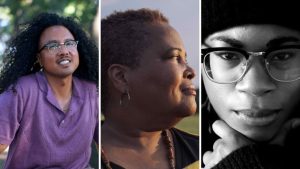
Meet the Newest Members of Our Board!
We are happy to announce three new Board members have joined our team at Working Films! Our Board of Directors reflect the diversity of our field– they’re community leaders, storytellers, filmmakers, and visionaries who bring expertise and deep passion for…
We are happy to announce three new Board members have joined our team at Working Films! Our Board of Directors reflect the diversity of our field– they’re community leaders, storytellers, filmmakers, and visionaries who bring expertise and deep passion for the work we do.
"On behalf of the Working Films Board, we are honored and thrilled to welcome the newest Board members to our growing organization," said Board Co-Chairs Felix Endara and Kim Pevia. "Ann, Courtney, and Adamu each bring an array of talent, energy, and passion that will support the work and mission of Working Films—including a growing and dynamic staff—that leverages the power of storytelling and documentary film to catalyze social change. Welcome to the dream team!"
Please join us in welcoming our newest Board members: Adamu Chan, Ann Bennett, and Courtney Symone Staton:
ADAMU CHAN
 Adamu Chan is a filmmaker, writer, and community organizer from the Bay Area who was incarcerated at San Quentin State Prison during one of the largest COVID-19 outbreaks in the country. He produced numerous short films while incarcerated, using his vantage point and experience as an incarcerated person as a lens to focus the viewer’s gaze on issues related to social justice. In 2021, he was a recipient of the Docs in Action Film Fund through Working Films, and was tapped to produce and direct his film What These Walls Won't Hold, which won Best Documentary Mid-Length at the 2023 San Francisco international Film Festival. In 2022, Adamu directed a documentary short for the doc-series Bridge Builders, partnering with ITVS/Independent Lens, about a community member working at the intersections of immigration, incarceration, and gender justice. He is also a 2022 Stanford University Center for Comparative Studies in Race and Ethnicity Mellon Arts Fellow and a 2023 Rockwood Institute Documentary Leaders Fellow. Adamu draws inspiration and energy from the voices of those directly impacted and seeks to empower them to reshape the narratives that have been created about them through film.
ANN BENNETT
Adamu Chan is a filmmaker, writer, and community organizer from the Bay Area who was incarcerated at San Quentin State Prison during one of the largest COVID-19 outbreaks in the country. He produced numerous short films while incarcerated, using his vantage point and experience as an incarcerated person as a lens to focus the viewer’s gaze on issues related to social justice. In 2021, he was a recipient of the Docs in Action Film Fund through Working Films, and was tapped to produce and direct his film What These Walls Won't Hold, which won Best Documentary Mid-Length at the 2023 San Francisco international Film Festival. In 2022, Adamu directed a documentary short for the doc-series Bridge Builders, partnering with ITVS/Independent Lens, about a community member working at the intersections of immigration, incarceration, and gender justice. He is also a 2022 Stanford University Center for Comparative Studies in Race and Ethnicity Mellon Arts Fellow and a 2023 Rockwood Institute Documentary Leaders Fellow. Adamu draws inspiration and energy from the voices of those directly impacted and seeks to empower them to reshape the narratives that have been created about them through film.
ANN BENNETT
 Ann Bennett is an Emmy-nominated documentary-filmmaker, multimedia-producer, and teaching-artist who has devoted her career to telling diverse stories through film, television, and interactive projects. She has produced documentaries for the PBS series American Experience, Independent Lens, and America ReFramed many of which have premiered at the Sundance Film Festival including; Through a Lens Darkly: Black Photographers and the Emergence of a People, and the multiplatform community-engagement initiative Digital-Diaspora-Family-Reunion. Bennett is a graduate of Columbia Journalism School and Harvard College, and she has won fellowships with the Sundance Producer Lab, Impact Partners, Laundromat Project, and Culture Push’s Black Utopian Practice.
COURTNEY SYMONE STATON
Ann Bennett is an Emmy-nominated documentary-filmmaker, multimedia-producer, and teaching-artist who has devoted her career to telling diverse stories through film, television, and interactive projects. She has produced documentaries for the PBS series American Experience, Independent Lens, and America ReFramed many of which have premiered at the Sundance Film Festival including; Through a Lens Darkly: Black Photographers and the Emergence of a People, and the multiplatform community-engagement initiative Digital-Diaspora-Family-Reunion. Bennett is a graduate of Columbia Journalism School and Harvard College, and she has won fellowships with the Sundance Producer Lab, Impact Partners, Laundromat Project, and Culture Push’s Black Utopian Practice.
COURTNEY SYMONE STATON
 Courtney Symone Staton, from Greenville, North Carolina, is a Black organizer, poet, and filmmaker dedicated to creating space for collective liberation through the sharing of stories. Her debut documentary, a participatory short Silence Sam, about the systemic silencing of activism during a movement to remove a Confederate monument from campus, premiered at BlackStar Film Festival in 2019, and since then has had impact-driven screenings across the South. Courtney believes deeply in reclaiming Black history, and uplifting stories of Black changemakers whose legacy we live in in the present, creating and leading Youth FX’s History Reclamation Project, a program reconnecting local high school students to Albany’s legacy of activism through participatory documentary filmmaking. A NeXt Doc fellow and impact producer of The Neutral Ground, Courtney works to drive viewers past the point of empathy to the point of healing and action.
For a complete list of our Board of Directors, click here!
Courtney Symone Staton, from Greenville, North Carolina, is a Black organizer, poet, and filmmaker dedicated to creating space for collective liberation through the sharing of stories. Her debut documentary, a participatory short Silence Sam, about the systemic silencing of activism during a movement to remove a Confederate monument from campus, premiered at BlackStar Film Festival in 2019, and since then has had impact-driven screenings across the South. Courtney believes deeply in reclaiming Black history, and uplifting stories of Black changemakers whose legacy we live in in the present, creating and leading Youth FX’s History Reclamation Project, a program reconnecting local high school students to Albany’s legacy of activism through participatory documentary filmmaking. A NeXt Doc fellow and impact producer of The Neutral Ground, Courtney works to drive viewers past the point of empathy to the point of healing and action.
For a complete list of our Board of Directors, click here!
Adamu Chan is a filmmaker, writer, and community organizer from the Bay Area who was incarcerated at San Quentin State Prison during one of the largest COVID-19 outbreaks in the country. He produced numerous short films while incarcerated, using his vantage point and experience as an incarcerated person as a lens to focus the viewer’s gaze on issues related to social justice. In 2021, he was a recipient of the Docs in Action Film Fund through Working Films, and was tapped to produce and direct his film What These Walls Won't Hold, which won Best Documentary Mid-Length at the 2023 San Francisco international Film Festival. In 2022, Adamu directed a documentary short for the doc-series Bridge Builders, partnering with ITVS/Independent Lens, about a community member working at the intersections of immigration, incarceration, and gender justice. He is also a 2022 Stanford University Center for Comparative Studies in Race and Ethnicity Mellon Arts Fellow and a 2023 Rockwood Institute Documentary Leaders Fellow. Adamu draws inspiration and energy from the voices of those directly impacted and seeks to empower them to reshape the narratives that have been created about them through film.
ANN BENNETT
Ann Bennett is an Emmy-nominated documentary-filmmaker, multimedia-producer, and teaching-artist who has devoted her career to telling diverse stories through film, television, and interactive projects. She has produced documentaries for the PBS series American Experience, Independent Lens, and America ReFramed many of which have premiered at the Sundance Film Festival including; Through a Lens Darkly: Black Photographers and the Emergence of a People, and the multiplatform community-engagement initiative Digital-Diaspora-Family-Reunion. Bennett is a graduate of Columbia Journalism School and Harvard College, and she has won fellowships with the Sundance Producer Lab, Impact Partners, Laundromat Project, and Culture Push’s Black Utopian Practice.
COURTNEY SYMONE STATON
Courtney Symone Staton, from Greenville, North Carolina, is a Black organizer, poet, and filmmaker dedicated to creating space for collective liberation through the sharing of stories. Her debut documentary, a participatory short Silence Sam, about the systemic silencing of activism during a movement to remove a Confederate monument from campus, premiered at BlackStar Film Festival in 2019, and since then has had impact-driven screenings across the South. Courtney believes deeply in reclaiming Black history, and uplifting stories of Black changemakers whose legacy we live in in the present, creating and leading Youth FX’s History Reclamation Project, a program reconnecting local high school students to Albany’s legacy of activism through participatory documentary filmmaking. A NeXt Doc fellow and impact producer of The Neutral Ground, Courtney works to drive viewers past the point of empathy to the point of healing and action.
For a complete list of our Board of Directors, click here!
Working Films News
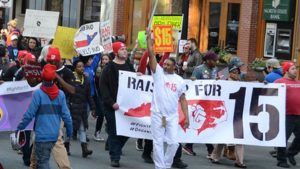
2023 Call for Media to Advance Workers' Rights
Working Films and our partners at Amazon Labor Union,NC State AFL-CIO, Starbucks Workers United, Union of Southern Service Workers, and United Farm Workers are looking for short films that will uplift the surge of workers refusing to remain silent and…
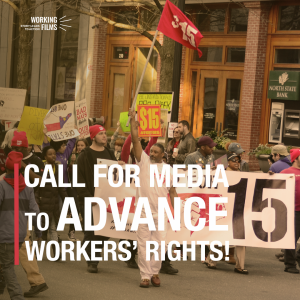 Working Films and our partners at Amazon Labor Union,NC State AFL-CIO, Starbucks Workers United, Union of Southern Service Workers, and United Farm Workers are looking for short films that will uplift the surge of workers refusing to remain silent and grow the current wave of worker-led organizing. Together, through the Docs in Action program, we will fund and curate films to support these efforts and resource workers who are fed up and ready to take action.
At a moment when workers are being called ‘essential’ but treated as disposable, and wealth inequality and union busting are on the rise—workers are fighting back by reigniting and reimagining union organizing. To meet this moment, there’s a real need to emphasize why unions matter, highlight worker-led success stories, provide how-tos for new organizers, and build recognition of the historic and contemporary importance of organizing in the South.
Unions offer hope to workers in our economy, are a tool to fight white supremacy in the workplace, and are at the intersection of multiple struggles for justice. We need to demonstrate these truths, showcase the collective power of this movement, and prove that the masses will always be stronger than the few people at the top. Beyond just building empathy and understanding, the films we are seeking to support will galvanize workers to organize their own workplaces and take action in solidarity with the labor movement.
The 2023 Docs in Action program has two tracks for filmmakers:
Working Films and our partners at Amazon Labor Union,NC State AFL-CIO, Starbucks Workers United, Union of Southern Service Workers, and United Farm Workers are looking for short films that will uplift the surge of workers refusing to remain silent and grow the current wave of worker-led organizing. Together, through the Docs in Action program, we will fund and curate films to support these efforts and resource workers who are fed up and ready to take action.
At a moment when workers are being called ‘essential’ but treated as disposable, and wealth inequality and union busting are on the rise—workers are fighting back by reigniting and reimagining union organizing. To meet this moment, there’s a real need to emphasize why unions matter, highlight worker-led success stories, provide how-tos for new organizers, and build recognition of the historic and contemporary importance of organizing in the South.
Unions offer hope to workers in our economy, are a tool to fight white supremacy in the workplace, and are at the intersection of multiple struggles for justice. We need to demonstrate these truths, showcase the collective power of this movement, and prove that the masses will always be stronger than the few people at the top. Beyond just building empathy and understanding, the films we are seeking to support will galvanize workers to organize their own workplaces and take action in solidarity with the labor movement.
The 2023 Docs in Action program has two tracks for filmmakers:
- Apply for up to $30,000 in funding for short documentary films. Only works-in-progress, short documentaries are eligible to apply for funding.
- Submit your completed documentary or narrative film to be included in a compilation that will be used to support worker organizing in 2024.
- Expand on the definition of what a union is, how a union can simply be workers coming together and making conditions better. We need to show examples of organizing that are outside of the National Labor Relations Board (NLRB) process, and demonstrate that organizing doesn’t always have to be limited to that one box alone. We need to show the alternative paths of organizing.
- Highlight success stories and show victories of people organizing their workplace, even when the odds are stacked against them. We especially need to see wins outside of traditional union industries.
- Demonstrate the difference between people working in a union vs. a non-union job, and the importance of unions and how they improve the lives of workers. These stories should go beyond contracts and should show how organizing gives people a sense of dignity, a sense of belonging, a sense of place, as well as camaraderie with their colleagues - not just one worker being pitted against another.
- Show the day-to-day process of workers organizing their workplaces, especially in the early stages of a specific campaign. These stories should include the good and the bad, and highlight the raw realities of organizing workplaces.
- Explain what the laws are/what rights exist for workers right now. There is a particular gap in terms of understanding what’s possible in the South.
- Expand on the idea of what success looks like. We need a broader understanding of what a “win” is. People are organized, not workplaces. If people go on strike and everyone is fired, those workers now being in the fight is a win. Building militancy in the working class, and workers saying they won't remain silent is a win.
- Make clear the importance of organizing in the South and how what happens in the South and what employers get away with in the South creates a framework for them to get away with it elsewhere.
- Show unions reinventing and renewing themselves to meet this moment.
- Highlight the importance of women, young people, and people of color in this movement.
- Demonstrate the challenge workers face to organize. From the racist legislation of the 1930s that excluded farm workers from organizing, to the Jim Crow segregationist “right to work” laws, to the NLRB getting in the way of union efforts - workers face massive hurdles to organizing, and they do so at great risk.
- Highlight how interracial organizing and fighting white supremacy is integral to the labor movement. A vision for labor should include larger issues of the working class including the struggle for racial equality, and alternatives to capitalism.
- Share an unsugarcoated day in the life of a low wage worker. We need to highlight the struggles workers face, and how it impacts their physical and mental health.
- Expose the nature of union busting and anti union conduct of employers, as well as corporate posturing and hypocrisy.
- Showcase the collective power of this movement, and the historic moment we are in.
- Demonstrate that unions are a vehicle to raise the standard not just for union workers, but for workers in general. When wages and working conditions are improved at larger employers, then there is pressure on other employers to keep pace.
- Demonstrate that benefits to workers go beyond the workplace, but to the whole community and society as a whole.
Working Films News
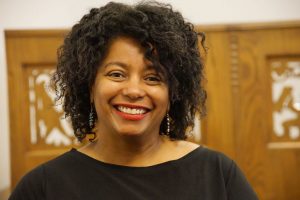
An Interview with Jacqueline Olive Director of "Always in Season"
Interviewed by Natalie Bullock Brown. N: Start off just by giving us your name, tell us a little about where you’re from, and how you got into filmmaking. J: I’m Jacqueline Olive. I am a director, producer, and writer…
Interviewed by Natalie Bullock Brown.
N: Start off just by giving us your name, tell us a little about where you’re from, and how you got into filmmaking.
J: I’m Jacqueline Olive. I am a director, producer, and writer of films, and primarily documentary films. I got into filmmaking because I fell in love with still photography and the power of an image to not just give you the information and facts of a situation or an event but to really bring you there so that you experience and you feel what goes on in a particular moment that you’re capturing. I was taking photographs of my son, I took probably ten thousand photographs of him by the time he was two and then was hooked. So, I decided to work in the industry and got hired to shoot news, sports, and weather for an NBC affiliate in my hometown in Mississippi. Loved a lot about it, but didn’t like that they were 60 second news packages. If you were lucky, you got to make 90 second news stories. I wanted to tell more in-depth stories and really looked into how I could do that and studied documentary film at the University of Florida and just moved into the industry from there.
N: Tell us about Always in Season and how that came about.
J: Always in Season is a documentary feature that examines the lingering impact of more than a century of lynching African Americans. I filmed in eight or nine communities across the country with relatives of the perpetrators and the victims of lynching, looking at how they were on a very grassroots level, looking at how they might be able to honor the victims, to acknowledge them, to repair the damage and lay the groundwork for reconciliation. The film ties that work around historical lynchings but through a very contemporary lens about the impact of what’s going on right now. We tie that in the film to the story of the 17-year old named Lennon Lacy who was found hanging from a swing set in 2014. Many people, including his mother Claudia, believes that he was lynched. So, we follow her journey to get an FBI investigation opened into the case.
N: What drew you to that story? I understand the work that you were doing in communities around lynching. What drew you specifically to Lennon’s story and to the community that he was apart of? J: I just heard it incidentally. That stuck with me when I heard in the media about Lennon’s death. I couldn’t imagine how a mother could deal with that level of trauma. My son was 17 at the time. I just couldn’t imagine. I wanted to reach out to see what was going on there, how I might be able to help.
I had been filming in communities across the country. So, I understood the horror that people faced historically around lynching. I had also moved back home to Mississippi and was there for seven years. During those seven years, I heard of at least four cases of young black men found hanging from a tree publicly from their own belts. Sadly, it was a very common story. I wasn’t even working on a film about lynching at the time.
I went there with that intention. The idea was to talk to everyone. I was never looking at the story as just whether Lennon was lynched or not. The driving force for me is how the police investigated his death. They did not consider the history of lynching terror in this country. They also didn’t consider the racial divisions that are going on in Bladenboro.
N: At what point did you decide that in the telling of Lennon’s story, it was important for you to really incorporate the input of not only Lennon’s mom, but also the community? J: For me, beyond the question of whether Lennon was lynched, was all the ties that were going on in that community that have been happening historically. The police very quickly, sweeping the death under the rug with a cursing investigation that’s happened historically. A community that’s left with stories, left with speculation, and rumor. That’s also reflected in communities that are dealing with historic lynchings. That’s what drove me there was to find out, not just what was going on around Lennon’s death, but to really suss out the impact on the entire community. N: Since you were not apart of Bladenboro, how did you negotiate that outsider relationship that you had to the community? How did you approach the community? How did you approach Ms. Lacy? How did you do all of that to really pay honor and respect to the fact that you were coming in wanting to tell a story that wasn’t your own? J: That’s a good question. Questions of representation when you’re a filmmaker, making a film in a community that is not your own are really important. They are questions that I ask of myself regularly. Not just about how I approach people but am I telling the story that accurately reflects what’s going on in the community and their experiences? And so a couple of things, there’s one: I’m from Mississippi. I’m from the South. I’m a Southerner. So, there are things that I know even though I didn’t grow up in a small town. Bladenboro is 1700 people. It’s small. Even in the scope of what people consider to be rural areas.There’s a lot that I know about the South. There is a lot that often is not portrayed about the South that I started to see on the ground that reminded me of my experience in Mississippi and also things that I had anticipated seeing. I’m also an African American filming a story in part about an African American community and their experience around this horror. It was really important for me to show up in a way that is ahistorical. Historically, the story of African Americans around lynching terrorism have been covered up and they’ve been denied. It was really important to dig in and to really reflect everyone in the community. Folks that are black, white, and people of color about their experiences there around Lennon’s death.
I reached out at first to Claudia and understandably Claudia wasn’t able really to engage with the media and didn’t want to engage with the media. Quite understandably, because she was deep in grief. I talked with Pierre and was really impressed as I spoke with him about how sincere he was. Neither Claudia or Pierre, by the way, said initially that they were convinced that Lennon was lynched or that they were convinced that he committed suicide. They both said that they wanted answers. They wanted to know what happened, regardless of where that led them. So, I understood very early on that the family had a lot of integrity. I reached out and connected with people in the community who did believe that Lennon was lynched like his friends, his neighbors, and people in the area who knew him. And it showed up across race. The other really interesting thing is that I expected that people would have various things to say about Lennon’s character. As it is with most people, you get some people who like you, some people who don’t like you. Literally, everyone that I talked to said what a beautiful person Lennon was and that he was a kind, warm, loving person. And it was a loss of everyone in the community, even when they thought they he committed suicide.I spoke with people who didn’t believe that he was lynched. I really wanted to reach out and make sure to cover all of my bases so that I could understand fully what’s going on from a multitude of perspectives, including the officials, the police officers, the medical examiner, the DA’s office.
Read the full interview here.
Working Films News
2023 Working Films’ Wilmington Screening Series
From our home base in Wilmington, North Carolina, Working Films collaborates with organizers and activists around the country to leverage powerful documentaries as tools for change. We often screen the film projects we work with in Port City, but this…
From our home base in Wilmington, North Carolina, Working Films collaborates with organizers and activists around the country to leverage powerful documentaries as tools for change. We often screen the film projects we work with in Port City, but this year we’re committed to bringing even more of these narrative-shifting films to Wilmington audiences in collaboration with local organizers and nonprofits working for social justice. In the coming weeks, we have four screenings lined up and more to be announced soon. Find the full details for these screenings below, and follow our socials for additions to our Wilmington screening series schedule.
2023 Wilmington Screening Series:
REFUGE
 Tuesday, April 18, 2023, 6:00 pm – 8:30 pm
UNCW - Bear Hall #106
The leader of a white nationalist hate group finds healing from the people he once despised: a Muslim heart doctor and a town of refugees.
Panelists:
Tuesday, April 18, 2023, 6:00 pm – 8:30 pm
UNCW - Bear Hall #106
The leader of a white nationalist hate group finds healing from the people he once despised: a Muslim heart doctor and a town of refugees.
Panelists:
 Thursday, April 20, 2023, 6:30 pm – 8:00 pm
Cameron Art Museum, 3201 S 17th St, Wilmington, NC
$10 suggested donation
Freedom Hill explores the environmental racism washing away Princeville, NC, the first town incorporated by freed, formerly enslaved Africans in America.
Panelists:
Thursday, April 20, 2023, 6:30 pm – 8:00 pm
Cameron Art Museum, 3201 S 17th St, Wilmington, NC
$10 suggested donation
Freedom Hill explores the environmental racism washing away Princeville, NC, the first town incorporated by freed, formerly enslaved Africans in America.
Panelists:
 Tuesday, April 25, 2023, 6:30 pm – 8:30 pm
Cape Fear Community College, Union Station Room 170
A 25-minute film created by the Center for Death Penalty Litigation that exposes the death penalty’s deep entanglement with slavery, lynching, and racism.
Panelists:
Tuesday, April 25, 2023, 6:30 pm – 8:30 pm
Cape Fear Community College, Union Station Room 170
A 25-minute film created by the Center for Death Penalty Litigation that exposes the death penalty’s deep entanglement with slavery, lynching, and racism.
Panelists:
 Friday, April 28, 2023, 7:30 pm
Jengo's Playhouse, 815 Princess St, Wilmington, NC 28401
When 17-year-old Lennon Lacy is found hanging from a swingset in rural North Carolina in 2014, his mother’s search for justice and reconciliation begins, while the trauma of more than a century of lynching African Americans bleeds into the present.
Panelist:
Friday, April 28, 2023, 7:30 pm
Jengo's Playhouse, 815 Princess St, Wilmington, NC 28401
When 17-year-old Lennon Lacy is found hanging from a swingset in rural North Carolina in 2014, his mother’s search for justice and reconciliation begins, while the trauma of more than a century of lynching African Americans bleeds into the present.
Panelist:
Tuesday, April 18, 2023, 6:00 pm – 8:30 pm
UNCW - Bear Hall #106
The leader of a white nationalist hate group finds healing from the people he once despised: a Muslim heart doctor and a town of refugees.
Panelists:
- Dr. Mayra Galeano (Med North Director)
- Wesley Magruder (Church World Service Wilmington Director)
- Edelmira Segovia (Director of Centro Hispano)
Thursday, April 20, 2023, 6:30 pm – 8:00 pm
Cameron Art Museum, 3201 S 17th St, Wilmington, NC
$10 suggested donation
Freedom Hill explores the environmental racism washing away Princeville, NC, the first town incorporated by freed, formerly enslaved Africans in America.
Panelists:
- Resita Cox (Filmmaker of Freedom Hill)
- Dr. Britt Moore (UNCW Professor of Environmental Science)
- Deborah Dicks Maxwell (President of the NC NAACP)
- Gene Felice (FLOW ILM Curator)
Tuesday, April 25, 2023, 6:30 pm – 8:30 pm
Cape Fear Community College, Union Station Room 170
A 25-minute film created by the Center for Death Penalty Litigation that exposes the death penalty’s deep entanglement with slavery, lynching, and racism.
Panelists:
- Moderated by NCCADP Executive Director Noel Nickle
- Daquan Peters (Founder of LEX)
- Dr. Kimberly Cook (Professor and Director of Restorative Justice Collaborative at UNCW)
- Alfred Rivera (Exoneree from NC's death row)
- Spoken word performance by Nick Courmon
Friday, April 28, 2023, 7:30 pm
Jengo's Playhouse, 815 Princess St, Wilmington, NC 28401
When 17-year-old Lennon Lacy is found hanging from a swingset in rural North Carolina in 2014, his mother’s search for justice and reconciliation begins, while the trauma of more than a century of lynching African Americans bleeds into the present.
Panelist:
- Jacqueline Olive (Director of Always in Season)
For regular updates on the 2023 Wilmington Screening Series, follow Working Films on Twitter and Instagram.
Working Films News
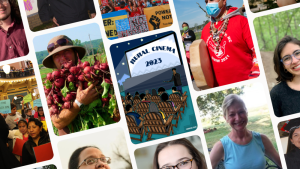
Meet the 2023 Rural Cinema Cohort!
We are pleased to announce the five locations and community leaders selected for Rural Cinema 2023: Kansas Rural Center and Prairie Band Potawatomi Nation (Prairie Band Potawatomi Nation), Environmental Justice Community Action Network (Sampson County NC), 7 Directions of Service…
We are pleased to announce the five locations and community leaders selected for Rural Cinema 2023: Kansas Rural Center and Prairie Band Potawatomi Nation (Prairie Band Potawatomi Nation), Environmental Justice Community Action Network (Sampson County NC), 7 Directions of Service (Pleasant Grove, NC), Safe, Affordable, Good Energy (SAGE TN) (Cookeville, TN), and Iowa CCI (Scott County, Iowa).
Rural Cinema is a training institute and community engagement program aimed at supporting community leaders located in rural areas and small towns across the United States to utilize documentary films to advance their local efforts to move people to action on critical issues facing their area.
This year’s cohort will participate in Rural Cinema’s virtual training institute covering Working Films’ Eight Elements of Putting Films to Work, a curriculum focused on best practices for using documentary film for change. At the end of the training and through individualized consultation, community leaders will organize multiple screening events over the course of the year.
Each organization will receive $7,500 in monetary support and EPIC Outdoor Cinema solar-powered film screening equipment (projectors, screens, speakers, etc.).
Meet the 2023 Rural Cinema cohort:
7 Directions of Service
 Founded by frontline activists Dr. Crystal Cavalier-Keck and Jason Crazy Bear Keck, 7 Directions of Service (7DS) is an Indigenous-led environmental justice and community organizing collective based on Crystal’s ancestral Occaneechi-Saponi homelands in rural North Carolina. Their mission involves canceling the Mountain Valley Pipeline/Southgate Extension and campaigning for legal Rights of Nature laws in North Carolina. 7DS is striving towards a long-term vision of rematriation and Indigenous-led food justice by developing its community garden into a hands-on learning and cultural center.
 Dr. Crystal Cavalier-Keck is a citizen of the Occaneechi Band of the Saponi Nation and she has dedicated the past 5+ years to defending her homelands against the Mountain Valley Pipeline/Southgate Extension. She is leading a campaign to bring Rights of Nature laws to North Carolina to protect the waterways and communities in the path of the pipeline. Crystal completed her Doctorate at the University of Dayton, focusing on the social justice epidemic of Missing Murdered Indigenous Women (MMIW) tied to gas and oil pipelines. This led her to launch the Missing Murdered Indigenous Women Coalition of North Carolina. Crystal serves on the boards of Movement Rights, The Haw River Assembly, The Women’s Resource Center, and Benevolence Farm, and is Policy Director at Toxic Free, North Carolina.
 Jason Crazy Bear Keck is the co-founder of 7 Directions of Service with his wife, Crystal. With a multiracial heritage as Choctaw-Apache, French African Creole, and European, Jason’s leadership is driven by the power of grassroots solidarity and bridge-building across differences. He is the former VP of outreach for an international men’s organization and currently leads programming for men and boys that foster Indigenous values and healthy male identities. Jason is a board member of Benevolence Farm, President of the Alamance County Native American Caucus, and the Communications Director of the 17 Rivers North Carolina Chapter of the American Indian Movement.
Learn more: https://7directionsofservice.com/.
Iowa CCI
Jason Crazy Bear Keck is the co-founder of 7 Directions of Service with his wife, Crystal. With a multiracial heritage as Choctaw-Apache, French African Creole, and European, Jason’s leadership is driven by the power of grassroots solidarity and bridge-building across differences. He is the former VP of outreach for an international men’s organization and currently leads programming for men and boys that foster Indigenous values and healthy male identities. Jason is a board member of Benevolence Farm, President of the Alamance County Native American Caucus, and the Communications Director of the 17 Rivers North Carolina Chapter of the American Indian Movement.
Learn more: https://7directionsofservice.com/.
Iowa CCI
 The mission of Iowa CCI is to empower and unite grassroots people of all ethnic backgrounds to take control of their communities; involve them in identifying problems and needs and in taking action to address them; and be a vehicle for social, economic, and environmental justice.
 Toby Raine is one of CCI’s Membership and Database Coordinators. He is involved in cleaning up member data, creating strategies for member growth and retention, and coordinating fundraising efforts. He came to CCI after several years of working for the Polk County District Court. Frustrated by the lack of public resources within the Justice System, Toby realized he wanted to be part of an organization dedicated to positive change rather than one that maintains the status quo. He is originally from a tiny town in southwest Iowa and went to a high school surrounded by corn and soybean fields. In his spare time, he likes to crochet, sew, read, and travel the Midwest with his partner.
 Ava Auen-Ryan started as Farm & Environment Organizer in July of 2018 and worked with CCI for three years before going on a vision quest to Ohio. Ava moved back to Iowa and rejoined the staff in November of 2022. Some of her favorite memories growing up in Iowa are playing in the crick on her grandparent’s farm, going fishing in the driftless region of the state, and the views of the Mississippi from her backyard in a small town in Southeast Iowa.
Learn more: https://www.iowacci.org/.
Environmental Justice Community Action Network
Ava Auen-Ryan started as Farm & Environment Organizer in July of 2018 and worked with CCI for three years before going on a vision quest to Ohio. Ava moved back to Iowa and rejoined the staff in November of 2022. Some of her favorite memories growing up in Iowa are playing in the crick on her grandparent’s farm, going fishing in the driftless region of the state, and the views of the Mississippi from her backyard in a small town in Southeast Iowa.
Learn more: https://www.iowacci.org/.
Environmental Justice Community Action Network
 Environmental Justice Community Action Network (EJCAN) is an organization focused on, and dedicated to, achieving environmental justice around North Carolina. EJCAN focuses on issues that have a significant impact on health, economic outcomes, and quality of life for residents in the state.
 Sherri White-Williamson co-founded EJCAN along with colleagues from Vermont Law School in July 2020. Since moving back to North Carolina she has worked to empower local community members to advocate for change in Sampson County. To date, the organization has helped to prevent contaminated soil from being dumped at the local landfill – the largest in the state. EJCAN continues to work in collaboration with university partners to provide free water testing for residents.
Learn more: https://www.ejcan.org/.
Kansas Rural Center and Praire Band Potawatomi Nation
Sherri White-Williamson co-founded EJCAN along with colleagues from Vermont Law School in July 2020. Since moving back to North Carolina she has worked to empower local community members to advocate for change in Sampson County. To date, the organization has helped to prevent contaminated soil from being dumped at the local landfill – the largest in the state. EJCAN continues to work in collaboration with university partners to provide free water testing for residents.
Learn more: https://www.ejcan.org/.
Kansas Rural Center and Praire Band Potawatomi Nation
 The mission of Kansas Rural Center is to promote the long-term health of the land and its people through research, education, and advocacy that advance an economically viable, ecologically sound, and socially just food and farming system.The Kansas Rural Center will be working with members of Prairie Band Potawatomi Nation located on Prairie Band Potawatomi land, currently known as Jackson County, Kansas.
 Mikayla “MK” Kerron is an Environmental/GIS Technician for the Prairie Band Potawatomi Nation where she coordinates the Clean Water Act 319 Nonpoint Source Pollution, Wetlands, and GIS Programs. She holds a B.A. in Indigenous and American Indian Studies from Haskell Indian Nations University where she focused her studies on climate change in Indigenous communities and Traditional Ecological Knowledge. Mikayla is an enrolled member of the Wichita & Affiliated Tribes in Oklahoma and is also a descendent from the Muscogee Creek Nation, Makah, and Quileute Tribes. Prior to her job with Prairie Band she was also a GAP Technician in the Environmental Programs Department for the Wichita & Affiliated Tribes and also a Bureau of Indian Affairs Intern for the Southeast Climate Adaptation Science Center at North Carolina State University. She will continue her studies at the University of Kansas to receive a M.S. in Geography and further her research climate change in Indigenous communities and TEK.
 Jackie Keller is the Sunflower Stories Program Coordinator for the Kansas Rural Center (KRC), a non-profit organization founded in 1979 that has been working with communities across Kansas on environmental issues since its inception. KRC’s mission is “To promote the long-term health of the land and its people through research, education and advocacy that advance an economically viable, ecological sound, and socially just food and farming system.” Jackie has been closely involved with KRC for over 20 years, much of which was spent serving on the board. Jackie earned a M.A. degree in International Relations from San Francisco State University with an emphasis on Environmental Policy, thesis topic was Sustainable Agriculture. She’s worked with diverse communities at Food First in Oakland, CA, Global Exchange and the San Francisco Departments of Agriculture and Environment. In 2000, she moved back to Kansas and transitioned her parent’s 200 acre conventional crop ground to organic, attaining certification in 2004. She’s been awarded the NRCS Water Quality Award for Shawnee County and the John Vogelsberg Sustainable Agriculture Award. Jackie has served on her Farm Service Agency (FSA) County Committee for twelve years. For almost thirty years she has advocated for healthy soil, water and food access, and social justice.
Learn more: https://kansasruralcenter.org/ and https://www.pbpindiantribe.com/.
Safe, Affordable, Good Energy (SAGE TN)
Jackie Keller is the Sunflower Stories Program Coordinator for the Kansas Rural Center (KRC), a non-profit organization founded in 1979 that has been working with communities across Kansas on environmental issues since its inception. KRC’s mission is “To promote the long-term health of the land and its people through research, education and advocacy that advance an economically viable, ecological sound, and socially just food and farming system.” Jackie has been closely involved with KRC for over 20 years, much of which was spent serving on the board. Jackie earned a M.A. degree in International Relations from San Francisco State University with an emphasis on Environmental Policy, thesis topic was Sustainable Agriculture. She’s worked with diverse communities at Food First in Oakland, CA, Global Exchange and the San Francisco Departments of Agriculture and Environment. In 2000, she moved back to Kansas and transitioned her parent’s 200 acre conventional crop ground to organic, attaining certification in 2004. She’s been awarded the NRCS Water Quality Award for Shawnee County and the John Vogelsberg Sustainable Agriculture Award. Jackie has served on her Farm Service Agency (FSA) County Committee for twelve years. For almost thirty years she has advocated for healthy soil, water and food access, and social justice.
Learn more: https://kansasruralcenter.org/ and https://www.pbpindiantribe.com/.
Safe, Affordable, Good Energy (SAGE TN)
 Safe, Affordable, Good Energy for Tennessee (SAGE TN) brings together community members in Tennessee’s Upper Cumberland fighting a proposed “natural” gas pipeline in their. The 122-mile Ridgeline Expansion Project would be owned by Enbridge, but is part of the Tennessee Valley Authority’s proposal to replace their coal-powered Kingston Fossil Plant with gas. Formed at the end of 2022, SAGE is working to stop these gas plans and instead urging TVA to choose a cleaner, more affordable plant replacement. SAGE TN believes in energy systems that support clean water, public safety, and environmental justice, and envision a future of local and sustainable energy in the Upper Cumberland.
 Gabi Lichtenstein is the Tennessee Energy Democracy Field Coordinator with Appalachian Voices. She organizes alongside SAGE TN and other communities impacted by TVA’s proposed gas replacement for the Kingston Fossil Plant. While pursuing her M.A. in geography, Gabi became active in the labor movement, organizing with co-workers at the United Campus Workers of Georgia (UCWGA). Her graduate research focused on power shutoffs and utility justice, and followed several years working to support energy democracy. Gabi is committed to transformative change led by impacted communities. She enjoys mountain hikes, outdoor concerts, and growing things.
 Breanna Ortner is a Media and Event Coordinator with SAGE TN. Brea grew up in rural Arkansas, but has lived in Cookeville for the last six years and is proud to call Tennessee home. They are so excited to combine their two great loves of theatre and activism. While you’re more likely to see them standing on the Square with a protest sign than on the stage, Brea has assisted in numerous local productions, namely CPAC’s The Complete Works of Shakespeare Abridged and Cookeville Theatre Company’s I am My Ancestors’ Wildest Dream. They would like to thank Working Films, Gabi with Appalachian Voices, the Universalist Unitarian Congregation and all SAGE TN’s volunteers. They give special love and thanks to their ever supportive husband Zac, Sisters Sam and Emily, and their forever found theatre family.
Founded by frontline activists Dr. Crystal Cavalier-Keck and Jason Crazy Bear Keck, 7 Directions of Service (7DS) is an Indigenous-led environmental justice and community organizing collective based on Crystal’s ancestral Occaneechi-Saponi homelands in rural North Carolina. Their mission involves canceling the Mountain Valley Pipeline/Southgate Extension and campaigning for legal Rights of Nature laws in North Carolina. 7DS is striving towards a long-term vision of rematriation and Indigenous-led food justice by developing its community garden into a hands-on learning and cultural center.
Dr. Crystal Cavalier-Keck is a citizen of the Occaneechi Band of the Saponi Nation and she has dedicated the past 5+ years to defending her homelands against the Mountain Valley Pipeline/Southgate Extension. She is leading a campaign to bring Rights of Nature laws to North Carolina to protect the waterways and communities in the path of the pipeline. Crystal completed her Doctorate at the University of Dayton, focusing on the social justice epidemic of Missing Murdered Indigenous Women (MMIW) tied to gas and oil pipelines. This led her to launch the Missing Murdered Indigenous Women Coalition of North Carolina. Crystal serves on the boards of Movement Rights, The Haw River Assembly, The Women’s Resource Center, and Benevolence Farm, and is Policy Director at Toxic Free, North Carolina.
Jason Crazy Bear Keck is the co-founder of 7 Directions of Service with his wife, Crystal. With a multiracial heritage as Choctaw-Apache, French African Creole, and European, Jason’s leadership is driven by the power of grassroots solidarity and bridge-building across differences. He is the former VP of outreach for an international men’s organization and currently leads programming for men and boys that foster Indigenous values and healthy male identities. Jason is a board member of Benevolence Farm, President of the Alamance County Native American Caucus, and the Communications Director of the 17 Rivers North Carolina Chapter of the American Indian Movement.
Learn more: https://7directionsofservice.com/.
Iowa CCI
The mission of Iowa CCI is to empower and unite grassroots people of all ethnic backgrounds to take control of their communities; involve them in identifying problems and needs and in taking action to address them; and be a vehicle for social, economic, and environmental justice.
Toby Raine is one of CCI’s Membership and Database Coordinators. He is involved in cleaning up member data, creating strategies for member growth and retention, and coordinating fundraising efforts. He came to CCI after several years of working for the Polk County District Court. Frustrated by the lack of public resources within the Justice System, Toby realized he wanted to be part of an organization dedicated to positive change rather than one that maintains the status quo. He is originally from a tiny town in southwest Iowa and went to a high school surrounded by corn and soybean fields. In his spare time, he likes to crochet, sew, read, and travel the Midwest with his partner.
Ava Auen-Ryan started as Farm & Environment Organizer in July of 2018 and worked with CCI for three years before going on a vision quest to Ohio. Ava moved back to Iowa and rejoined the staff in November of 2022. Some of her favorite memories growing up in Iowa are playing in the crick on her grandparent’s farm, going fishing in the driftless region of the state, and the views of the Mississippi from her backyard in a small town in Southeast Iowa.
Learn more: https://www.iowacci.org/.
Environmental Justice Community Action Network
Environmental Justice Community Action Network (EJCAN) is an organization focused on, and dedicated to, achieving environmental justice around North Carolina. EJCAN focuses on issues that have a significant impact on health, economic outcomes, and quality of life for residents in the state.
Sherri White-Williamson co-founded EJCAN along with colleagues from Vermont Law School in July 2020. Since moving back to North Carolina she has worked to empower local community members to advocate for change in Sampson County. To date, the organization has helped to prevent contaminated soil from being dumped at the local landfill – the largest in the state. EJCAN continues to work in collaboration with university partners to provide free water testing for residents.
Learn more: https://www.ejcan.org/.
Kansas Rural Center and Praire Band Potawatomi Nation
The mission of Kansas Rural Center is to promote the long-term health of the land and its people through research, education, and advocacy that advance an economically viable, ecologically sound, and socially just food and farming system.The Kansas Rural Center will be working with members of Prairie Band Potawatomi Nation located on Prairie Band Potawatomi land, currently known as Jackson County, Kansas.
Mikayla “MK” Kerron is an Environmental/GIS Technician for the Prairie Band Potawatomi Nation where she coordinates the Clean Water Act 319 Nonpoint Source Pollution, Wetlands, and GIS Programs. She holds a B.A. in Indigenous and American Indian Studies from Haskell Indian Nations University where she focused her studies on climate change in Indigenous communities and Traditional Ecological Knowledge. Mikayla is an enrolled member of the Wichita & Affiliated Tribes in Oklahoma and is also a descendent from the Muscogee Creek Nation, Makah, and Quileute Tribes. Prior to her job with Prairie Band she was also a GAP Technician in the Environmental Programs Department for the Wichita & Affiliated Tribes and also a Bureau of Indian Affairs Intern for the Southeast Climate Adaptation Science Center at North Carolina State University. She will continue her studies at the University of Kansas to receive a M.S. in Geography and further her research climate change in Indigenous communities and TEK.
Jackie Keller is the Sunflower Stories Program Coordinator for the Kansas Rural Center (KRC), a non-profit organization founded in 1979 that has been working with communities across Kansas on environmental issues since its inception. KRC’s mission is “To promote the long-term health of the land and its people through research, education and advocacy that advance an economically viable, ecological sound, and socially just food and farming system.” Jackie has been closely involved with KRC for over 20 years, much of which was spent serving on the board. Jackie earned a M.A. degree in International Relations from San Francisco State University with an emphasis on Environmental Policy, thesis topic was Sustainable Agriculture. She’s worked with diverse communities at Food First in Oakland, CA, Global Exchange and the San Francisco Departments of Agriculture and Environment. In 2000, she moved back to Kansas and transitioned her parent’s 200 acre conventional crop ground to organic, attaining certification in 2004. She’s been awarded the NRCS Water Quality Award for Shawnee County and the John Vogelsberg Sustainable Agriculture Award. Jackie has served on her Farm Service Agency (FSA) County Committee for twelve years. For almost thirty years she has advocated for healthy soil, water and food access, and social justice.
Learn more: https://kansasruralcenter.org/ and https://www.pbpindiantribe.com/.
Safe, Affordable, Good Energy (SAGE TN)
Safe, Affordable, Good Energy for Tennessee (SAGE TN) brings together community members in Tennessee’s Upper Cumberland fighting a proposed “natural” gas pipeline in their. The 122-mile Ridgeline Expansion Project would be owned by Enbridge, but is part of the Tennessee Valley Authority’s proposal to replace their coal-powered Kingston Fossil Plant with gas. Formed at the end of 2022, SAGE is working to stop these gas plans and instead urging TVA to choose a cleaner, more affordable plant replacement. SAGE TN believes in energy systems that support clean water, public safety, and environmental justice, and envision a future of local and sustainable energy in the Upper Cumberland.
Gabi Lichtenstein is the Tennessee Energy Democracy Field Coordinator with Appalachian Voices. She organizes alongside SAGE TN and other communities impacted by TVA’s proposed gas replacement for the Kingston Fossil Plant. While pursuing her M.A. in geography, Gabi became active in the labor movement, organizing with co-workers at the United Campus Workers of Georgia (UCWGA). Her graduate research focused on power shutoffs and utility justice, and followed several years working to support energy democracy. Gabi is committed to transformative change led by impacted communities. She enjoys mountain hikes, outdoor concerts, and growing things.
Breanna Ortner is a Media and Event Coordinator with SAGE TN. Brea grew up in rural Arkansas, but has lived in Cookeville for the last six years and is proud to call Tennessee home. They are so excited to combine their two great loves of theatre and activism. While you’re more likely to see them standing on the Square with a protest sign than on the stage, Brea has assisted in numerous local productions, namely CPAC’s The Complete Works of Shakespeare Abridged and Cookeville Theatre Company’s I am My Ancestors’ Wildest Dream. They would like to thank Working Films, Gabi with Appalachian Voices, the Universalist Unitarian Congregation and all SAGE TN’s volunteers. They give special love and thanks to their ever supportive husband Zac, Sisters Sam and Emily, and their forever found theatre family.
For regular updates on the Rural Cinema 2023 cohort, follow Working Films on Twitter and Instagram.
Applications for Rural Cinema 2024 will open in late Winter 2023.
Rural Cinema is made possible with generous support from the Kendeda Fund, Perspective, Putnam Foundation, and the Z. Smith Reynolds Foundation.
Download the press release here.