
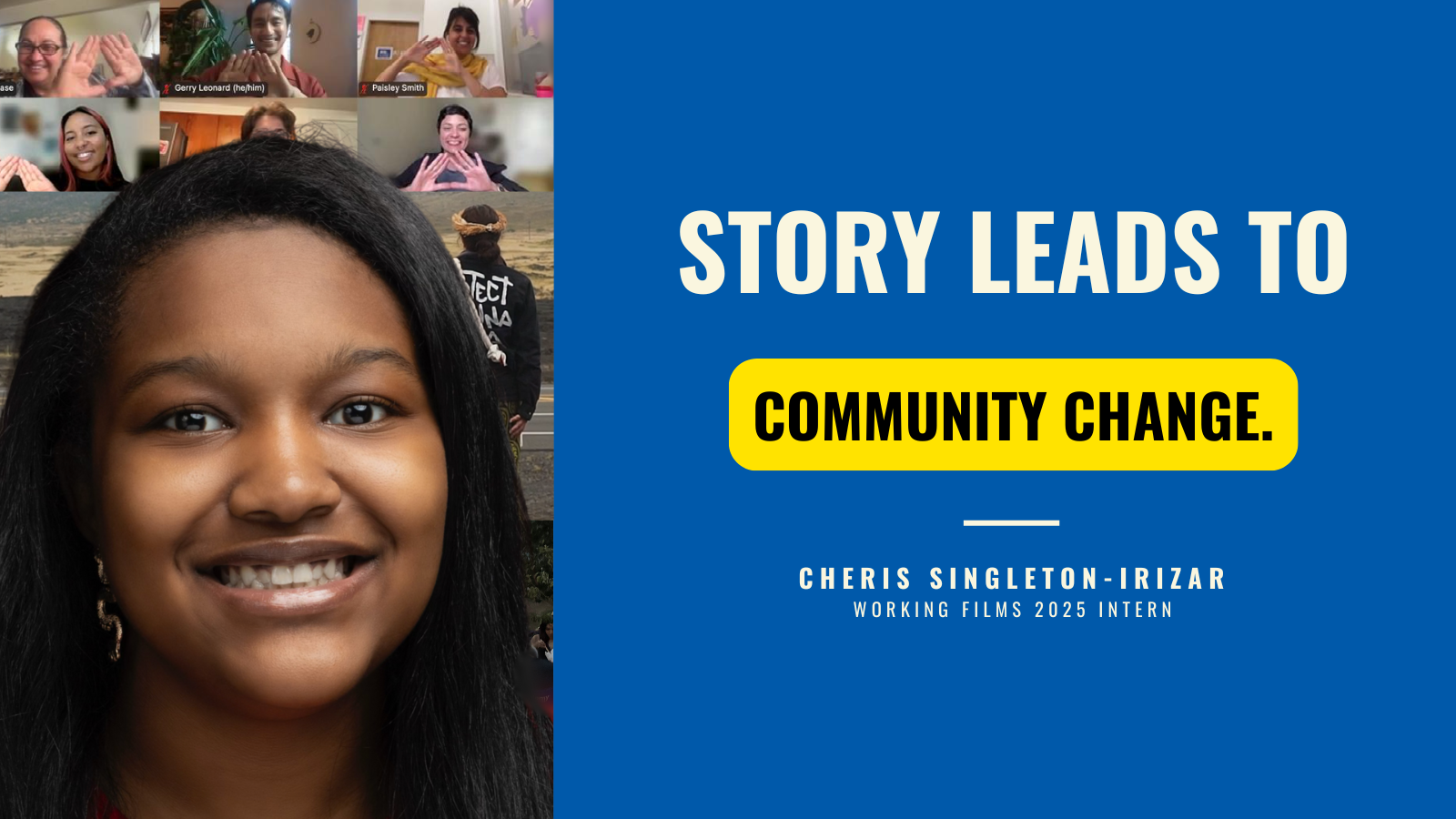
The Working Films team had the chance to work with Cheris Singleton-Irizary this summer through the Nonprofit Internship Program hosted by the NC Network of Grantmakers. Cheris is a Child Development major at Meredith College and originally from Wilmington, NC. Her passion for community care, arts, and youth empowerment and resourcing caught our eye, and since bringing her on, we’ve been able to collaborate with her on building out our youth focused film programming. She has also gotten to learn about different organizing efforts and support our work on film impact strategy. Now that the summer is coming to a close (way too soon!), it fills our hearts to be able to share some of her reflections on her time with us and storytelling for change. – Hannah Hearn, Working Films’ Fellowships Lead
 My internship at Working Films has been one of the most fulfilling experiences I’ve ever had. In just eight weeks (that felt way too short), I have learned so much about “films for change” and have personally grown in ways I would’ve never even imagined I’d experience when I first signed up for the opportunity. I understand more about the nonprofit sector, what it means to dedicate yourself to this work, and, most importantly, what’s key to a better world. In just a few words, it is: authentic, raw storytelling.
If you have a moment, I’d love to pass on a gift that was once graciously given to me.
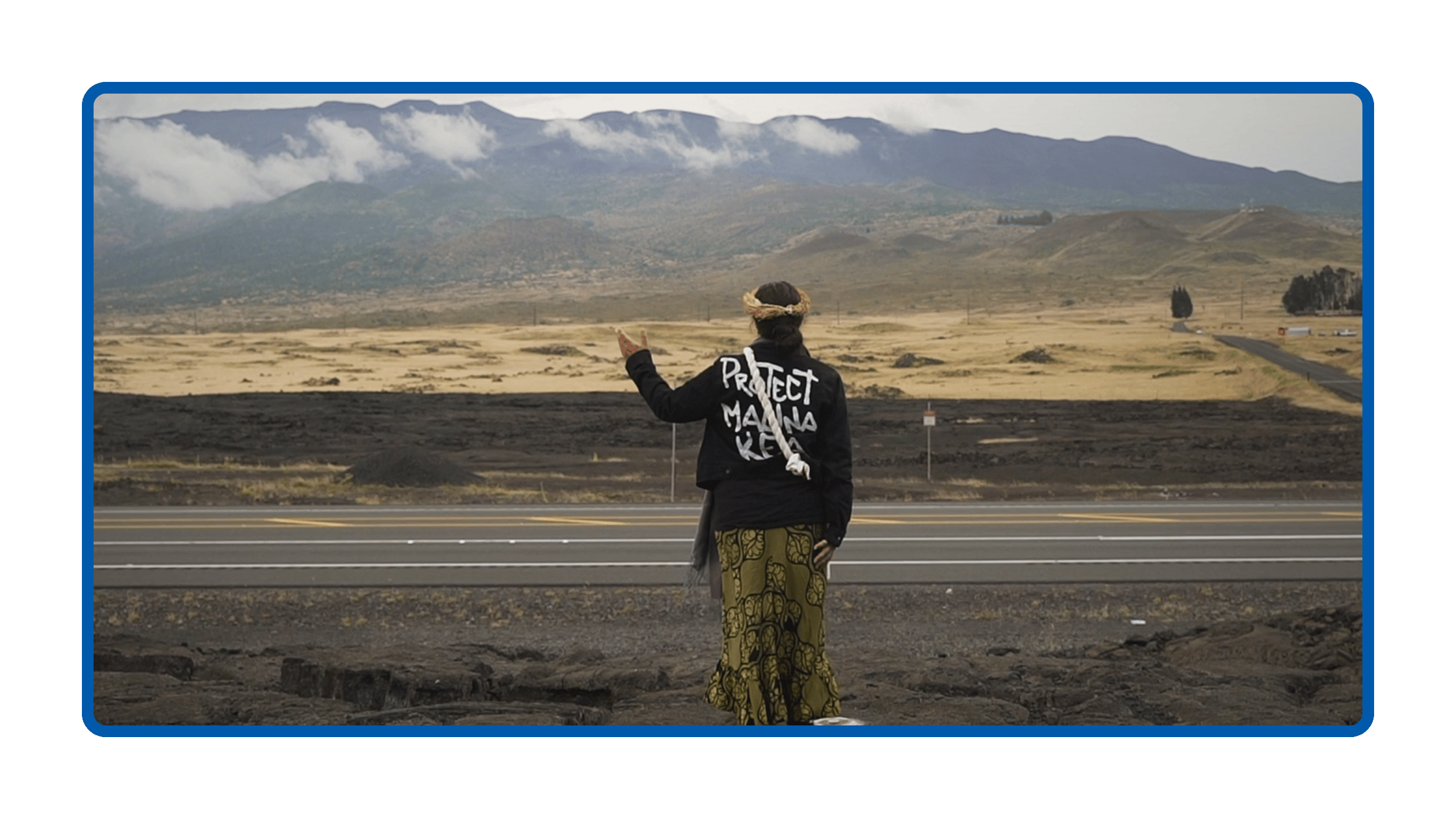
At the start of my internship, I received a folder of materials and a task list from Hannah Hearn, Working Films’ Fellowships Lead, to get me started on the right track. One of my first tasks was to watch a film from their Impact Kickstart program. I chose the film Standing Above the Clouds, and I was not just moved, but forever changed by their story. I learned of Mauna Kea, a sacred mountain of Hawaii, and the life’s work of indigenous Hawaiian women from three different families who swore to keep her safe. Across those 90 minutes, I cried, I empathized, and once it was over, I digested all the knowledge that had been gifted through the film. Pieces of indigenous Hawaiian history that dominant culture tries to erase, an active movement that demands for consent to be a foundational aspect and mandatory, the sorrows and joys of those who commit their lives to Mauna Kea, all things I would never be privy to if not for Working Films, Impact Kickstart, and Standing Above the Clouds.
Working Films’ culture and endeavors introduced me to the concept of “films for change.” Films are just one vehicle for nonfiction storytelling, but they’re not to be underestimated, as they have many positives when it comes to social and environmental justice work. At their best, films are captivating and easy to disseminate. Those characteristics make film a good tool for those who are trying to spread awareness and gain support for a cause. However, many leaders on these frontlines don’t know the potential storytelling and film have to help them reach their goals. Getting to understand that, and thinking of all the lost opportunities for filmmakers and grassroots organizations, broke my heart.
Working Films sees that gap and is mobilizing to close it by facilitating the connections needed between underrepresented filmmakers and those on the frontlines of dismantling oppression, whether they are community leaders close to the issue or grassroots organizations seeing where things can improve. Through facilitating these connections, Working Films eases the processes of collaborating with multiple parties and finding common ground for those they help. In turn, it’s easier for people to learn from one another and find out what’s possible going forward.
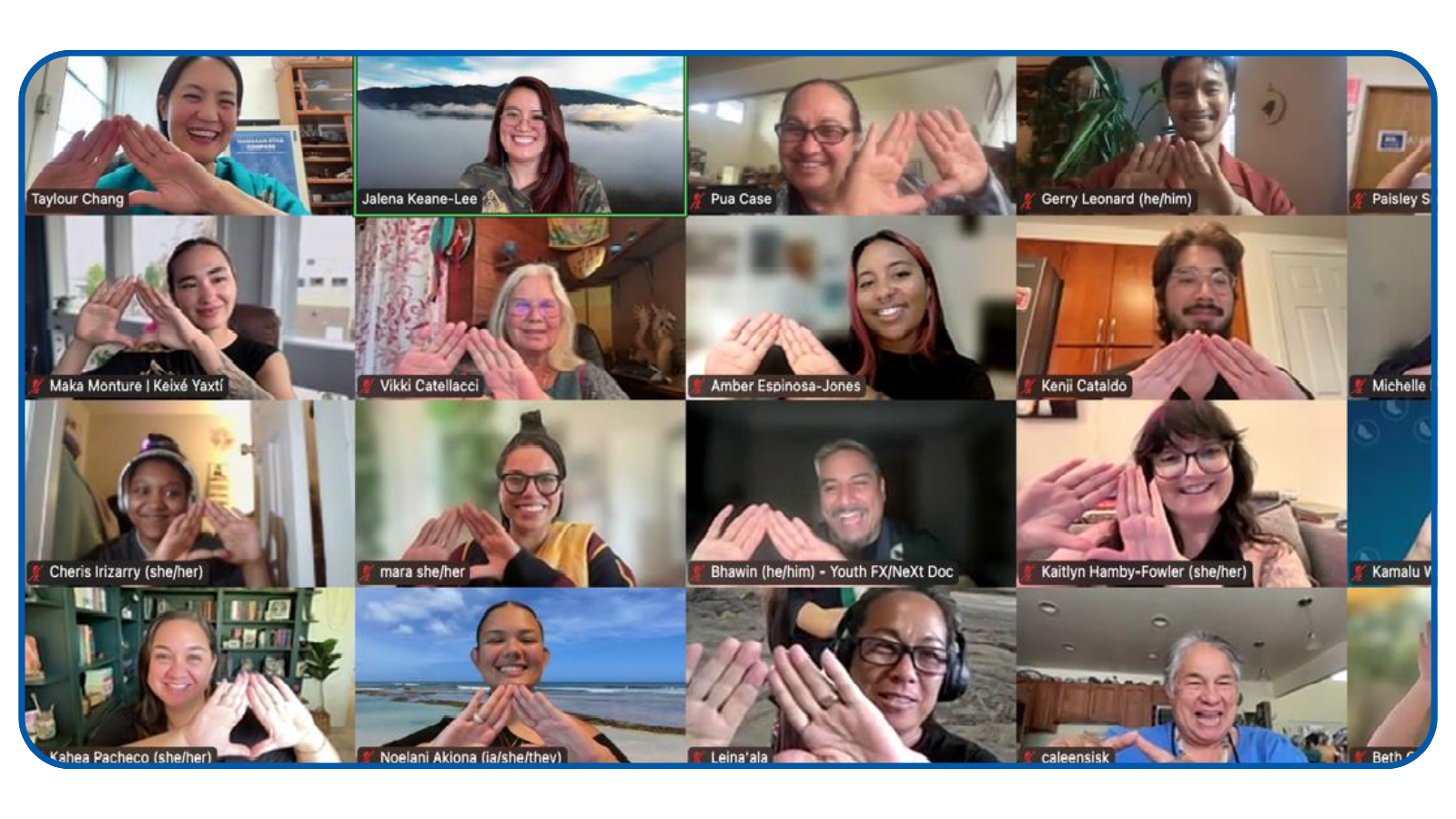
I witnessed this work in action while helping two staff members facilitate the virtual strategy summit for the Standing Above the Clouds film team. These strategy summits are a collaborative seminar organized through Working Films and the filmmaking cohort of their Impact Kickstart program to complete the aforementioned goal. Gerry Leonard, Director of Filmmaker Services & Impact, and Mara Henderson, Impact Coordinator, prepared with immense care and ensured the event ran smoothly. It was noticeable how much effort was put into making the event sustainable, productive, and accessible for all participants, with tools like grounding exercises, accessibility check-ins, and more.
 The summit brought together Standing Above The Clouds director Jalena Keane-Lee and producer Amber Espinosa-Jones, who shared their vision for the film’s impact. They were joined by Pua Case, one of Mauna Kea Education and Awareness (MKEA) frontline leaders and a protagonist of SATC was there to represent her community’s goals and insight into impact work. Nearly 30 other participants at the summit, all there to share and learn from each other as they created a strategy on how to best use the grant from Impact Kickstart to create social and environmental impact.
A major takeaway from the virtual gathering was that the future generation will need to work on making the work more sustainable, how it’s important to keep personal wellness in mind, because once your body starts to break down it’s harder to commit yourself to the things that really matter. We also had conversations about creating resources for youth to educate them on Mauna Kea in local Hawaiian schools and the power of intergenerational collaboration.
That’s the deeper power of “films for change”—they’re part of a much larger web: storytelling for change. Sharing stories allows us to bridge gaps and educate in ways secondary sources can’t, as the summit did. I felt connected to the women on the Mauna because they were able to tell their stories so effectively and, in turn, I learned about what they were fighting for. The tool that made it happen should be shared throughout the field of social and environmental justice so other communities can utilize it and experience the good it can bring them and their people as well. And, some may ask: well, isn’t that how we got in this mess in the first place, telling stories? This is because, for the longest time, narratives have been spun by oppressors to justify their mistreatment of marginalized groups and the Earth itself. That’s why I didn’t just say storytelling, because, with the wrong motive, storytelling is just propaganda. It’s not a process of expressing oneself and their reality. It is simply a means to an end. Raw, authentic storytelling is about telling your truth. Not the truth, but one personal to you. It allows space for all and commands accountability so that we may share knowledge rather than debate right and wrong. That’s why I feel it is the key to a better world, because its process makes you embody all of the things dominant culture tries to sideline. Audre Lorde, an amazing Black woman, feminist, and author once wrote an essay titled, “The Master’s Tools Will Never Dismantle the Master’s House.” If we are to deconstruct our own systemic torment, we must rework the tools once used to construct it.
For 25 years, Working Films has harnessed the power of documentary to ignite action. As we celebrate this milestone, we invite you to help shape the next 25 years of storytelling for justice. Your donation supports grassroots movements, underrepresented filmmakers, and films that make a difference. Join us: workingfilms.org/donate.